
Web Design · Local SEO
Beach House Moving
Custom Next.js site with county-level service-area pages built to rank — the local SEO moat done right.
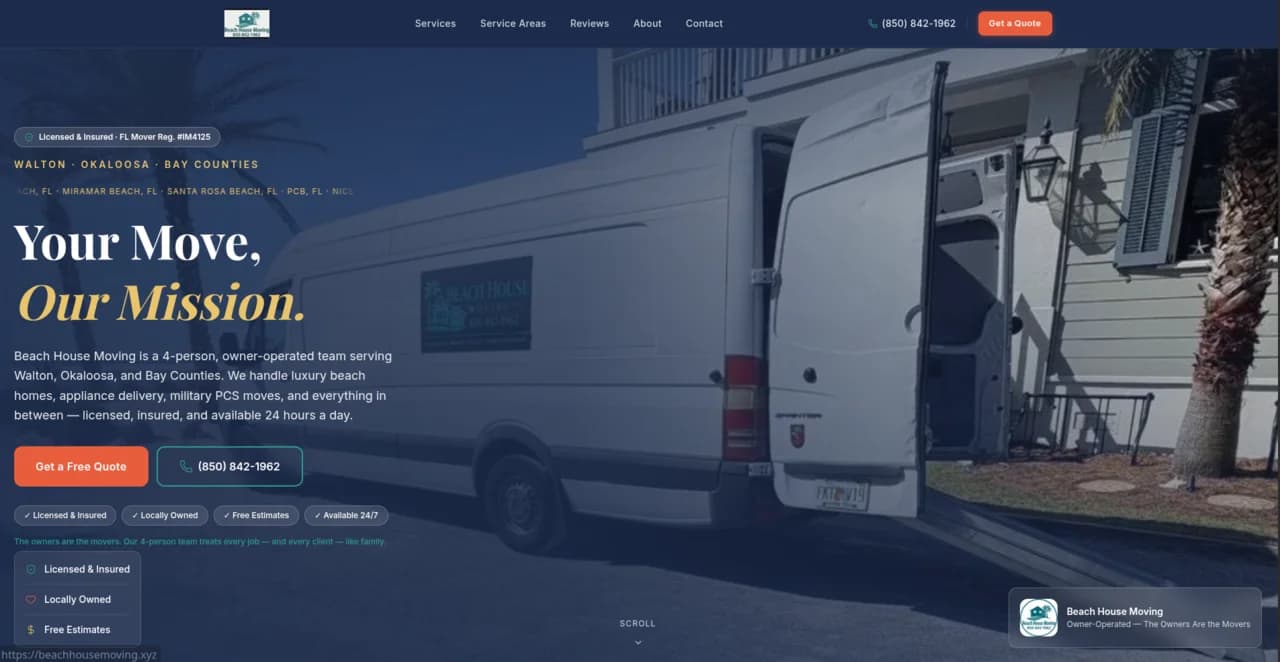
The challenge
Movers don't get found by being good. They get found by owning the geography — the exact town and county someone searches the night before a move. A single-page template that names one city and stops there can't do that. The searches that matter are happening in a dozen places it never mentions, and the visibility a local company should own goes to the aggregator directories instead.
The approach
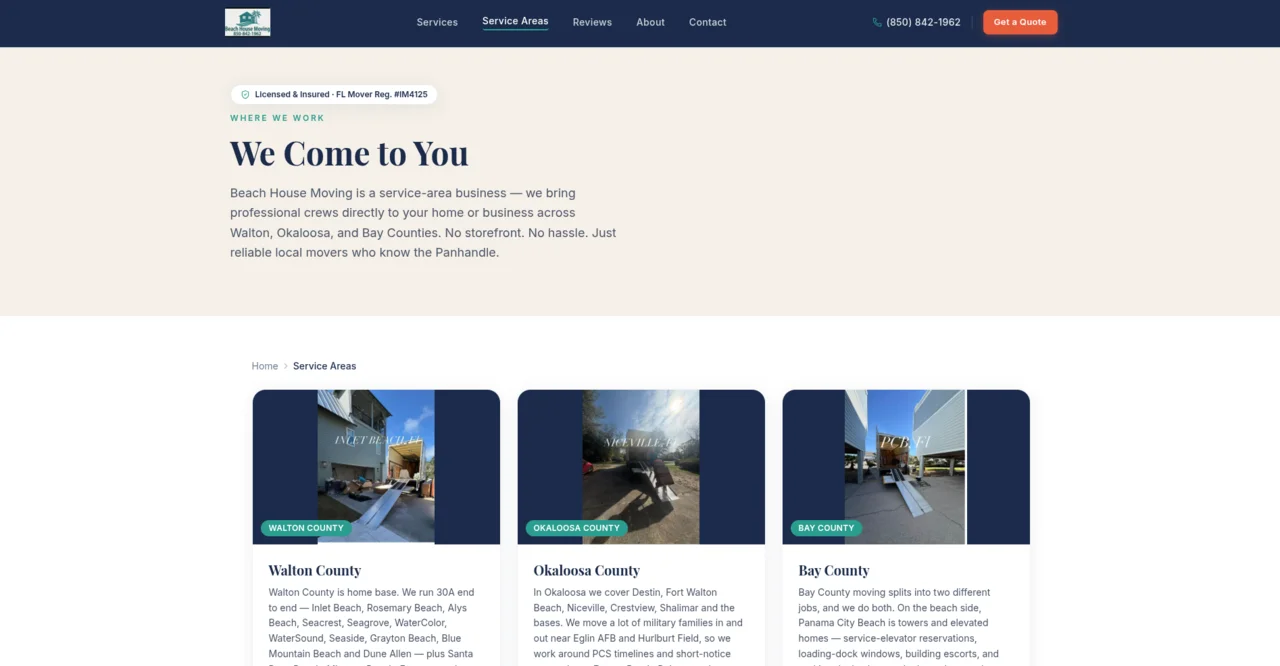
Saltwater built the site county by county. Every place Beach House actually works got its own service-area page, written from real job knowledge instead of a find-and-replace on the city name. Schema went in from the first commit — LocalBusiness and service-area markup that tells Google and AI assistants exactly where the company operates and what it does. Each page is built to convert the visit it earns, with a call and a quote request never more than a tap away.
What shipped
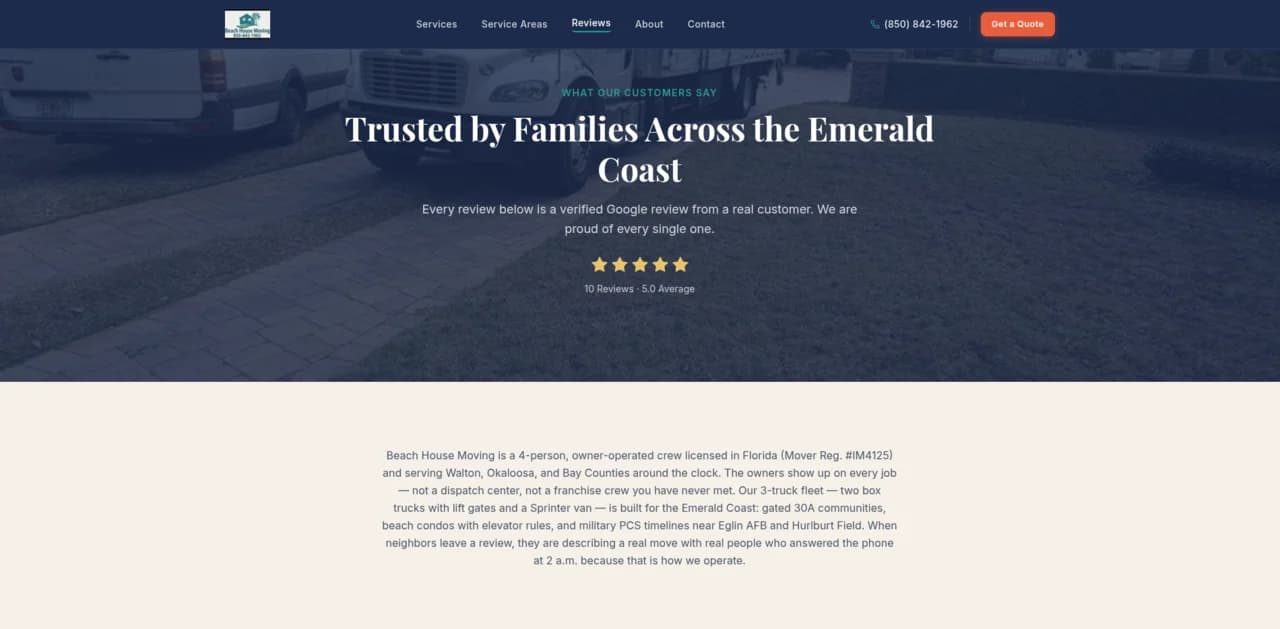
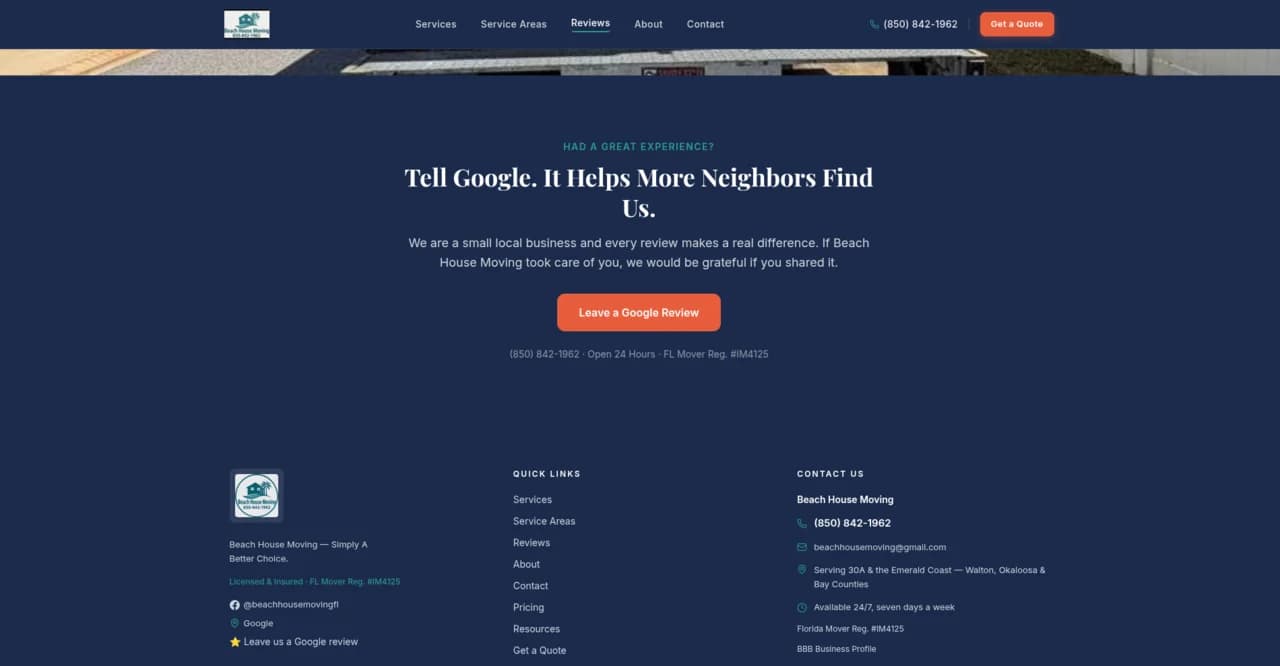
A custom Next.js site with a service-area page for every county Beach House covers — each one schema-first and written to rank for the local term, not a generic “moving services” keyword. The call and quote paths are wired through every page. It's the local SEO moat done right: depth a template can't copy, because the template never added the schema or the county-level pages in the first place.
Stack
- Next.js · TypeScript
- Tailwind CSS
- LocalBusiness + service-area schema (JSON-LD)
- County-level service-area pages
- Call + quote conversion paths
- Vercel
A closer look
Running a local service business? The same county-level build applies — see the SEO, AEO & GEO work, the website build, or a quote on your service area.